The EIC Pathfinder Open project CHEM-SCAN aims to build a radically new technology for the noninvasive functional imaging of single cells in tissues and organoids with unprecedented spatiotemporal resolution.
Cancer is the second most common cause of death for Europeans. Despite our best efforts to diagnose, understand, and treat cancer at its earliest stage, its occurrence continues to rise. For most Europeans chemotherapy will remain an essential component (alongside surgery) of their treatment options despite the continuous progress of alternatives, such as immunotherapy.
The development of chemoresistance, i.e. the ability of cancer cells to evade treatment, has, however, become a major challenge for current cancer therapy and significantly contributes to most tumor relapses and deaths.
Critically, individual tumor entities and even cases within the same cancer type show remarkably heterogeneous response to chemotherapeutic agents, making standardized treatment protocols often ineffective.
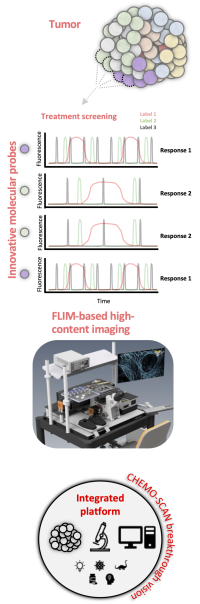
The EIC Pathfinder Open Project CHEM-SCAN plans to address this problem by providing novel fluorescent probes for the energetic/reductive state of cells, metabolites, and metabolic indicators that can assess single cells across multiple length and wavelength scales. These probes will be assessed in living cells with a breakthrough high-speed fluorescence lifetime imaging (FLIM) platform providing highest sensitivity and spatiotemporal resolution from the visible to the shortwave infrared spectral region.
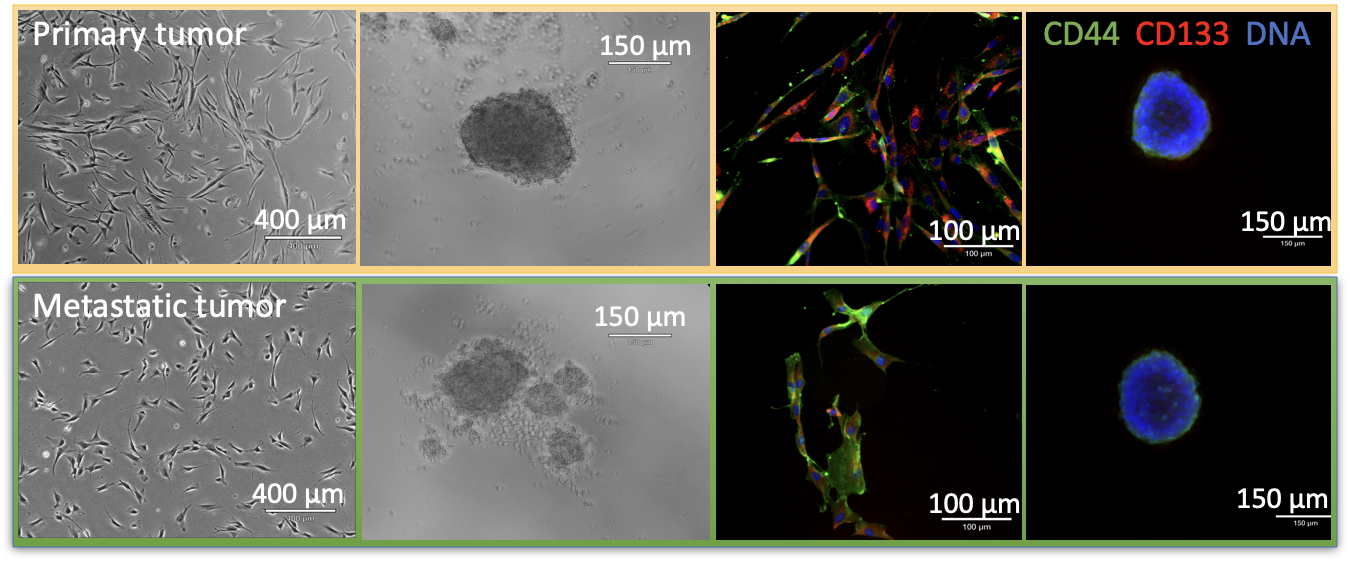
Primary and metastatic tumors exhibit distinctly different behavior. Top row: light microscopy images of cultivated patient-derived primary cancer stem-like cells (CRCs) and spheroids grown from these cells. Bottom row: images of metastatic CRCs. Both cell populations exhibit distinct morphologies, and express common CSC markers CD44 and CD133. Figure courtesy Laureen Helweg, Bielefeld University